
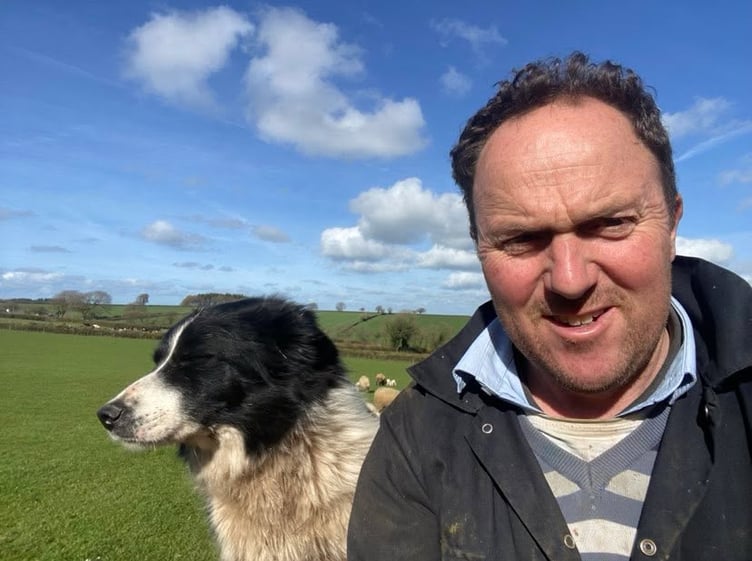
A CORNISH farmer has said that those in the industry have been left unprepared due to the slow actions of Defra and other industry representatives in tackling bluetongue.
Farmer Adrian Parsons, who is also Cornwall councillor for Altarnun and Stoke Climsland, has described the situation as ‘heartbreaking’ as the virus impacts farmers across the region.
“Bluetongue is now well and truly circulating across farms in the South West, spreading like wildfire through sheep and cattle,” he told us.
After the initial outbreak, Adrian spoke out about the seeming lack of reaction to the disease, despite its potential to have a detrimental impact on the farming landscape.
Now, his farm has been hit by the disease himself.
“When it hit us nearly a month ago, I was taken aback by how quickly it moved through our flock,” he said. “I had assumed that, if we were affected, we might see a few isolated cases. Never did I expect it to explode in the way it did.
“Clearly, the midges that spread the virus managed to survive the winter on our shores and, with the prolonged hot and dry spell, multiplied in favourable conditions to infect livestock and wreak havoc.
“We vaccinated our sheep and cattle three weeks ago and can already see a noticeable improvement. The sheep are looking fuller, fitter and happier again, much as they did before the outbreak, and I haven't lost any breeding sheep for almost a week now.
“The financial impact on our business, however, will be felt for some time. The loss of breeding ewes and rams, the costs associated with their disposal, the need to replace valuable stock, and the money spent on vaccines and supportive treatments for affected animals have already spiralled into the thousands of pounds. What remains unknown is the longer-term impact on our breeding flock and the implications for next year's lambing season, particularly as the rams were due to be turned in with the ewes within a matter of weeks.”
Adrian says that despite the slow reaction of industry representatives, local vets have been instrumental in supporting farmers.


“Some of the stories of losses I am hearing from farms across Cornwall and Devon are heartbreaking and will cause significant anguish for those affected,” he continued. “Our vets have been tremendous throughout, and I believe their support and advice have been critical in helping farmers through some very difficult moments.
“I also believe that Defra and some of those representing our industry were slow to recognise the true scale of the problem developing at farm level, particularly given how slowly cases were identified and recorded by APHA [Animal and Plant Health Agency]. By the time the seriousness of the outbreak was fully understood, we found ourselves in a situation where vaccine supplies had all but run out across the country. As a result, farmers on the fringes of hotspot areas are struggling to access vaccines to protect their livestock and help contain the spread of the virus.
“Too often in this country we seem to find ourselves unprepared for disease outbreaks, lacking either the resources or the readiness needed to respond effectively. While it is encouraging to hear that some farmers are now coming out the other side of this difficult period, I fear that without widespread vaccination we will continue to see the virus spread and inflict further damage on farming businesses.
“If this is the reality of a changing climate, with wetter winters and warmer summers creating increasingly favourable conditions for diseases such as bluetongue, then these are challenges our industry will need to adapt to and learn to live with.”
Comments
This article has no comments yet. Be the first to leave a comment.