

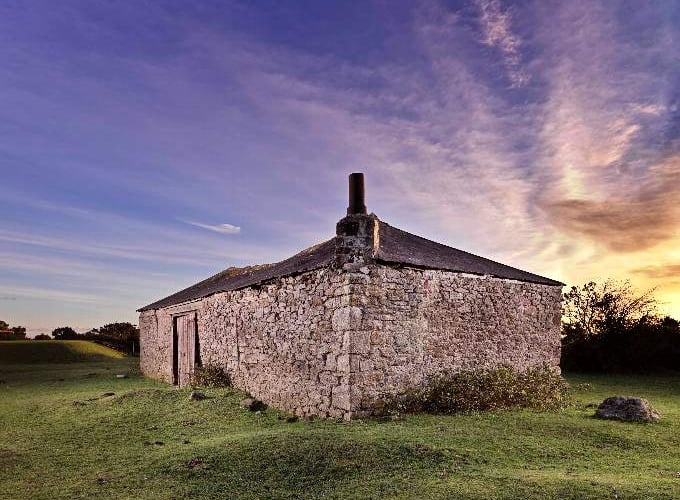
A LEGACY of the Plymouth to Dartmoor Tramway, one of the country’s oldest tramway enterprises designed to boost the Dartmoor economy, has been given Grade II listed status.
Tyrwhitt’s Wharf at Roborough Down in the parish of Buckland Monachorum is an important early example of a horse tramway building, which is very rare nationally. It was built in 1823 as a staging point for the stabling and refreshment of the horses used to operate the Plymouth to Dartmoor Tramway, part of local MP Sir Thomas Tyrwhitt’s plan to improve the economy of the moorland.
The wharf was built when the tramway’s first line opened in 1823, an occasion celebrated by a public breakfast for 1,000 guests.
The tramway was completed in 1827 and extended from Princetown on Dartmoor to Sutton Harbour in Plymouth, a distance of 25.5 miles. The tramway carried quarried granite stone from Dartmoor to Plymouth for its use in construction projects and brought raw materials and general supplies back to Princetown. By 1840 traffic had reduced considerably and in 1883 part of the tramway was redeveloped as the standard gauge Princetown Railway. The remainder went out of use by 1900 and most of the rails were removed in 1916.



Sir Thomas Tyrwhitt (1762-1833) also constructed a number of roads across Dartmoor as part of his vision to improve agricultural development on the moorland. He also created the settlement of Princetown and the nearby prison for those captured during the Napoleonic Wars (now HM Prison Dartmoor).
Tyrwhitt’s Wharf is built of Dartmoor granite and retains evidence of functional features such as the tall entrances at either end of the building to allow horses to enter and leave. The route of the horse-drawn tramway can still be traced in parts of the moorland landscape, and some of it is now used as a trackway.
The building is one of 300 site across the country which have been protected through listing or scheduling in the past year.
Other highlights include a striking post-war library in Saltash and the almost-intact remains of HMS/m D1, the prototype for the D-class submarine that was commissioned into the Royal Navy in 1909 and served in the First World War at Dartmouth and the home of poet Charles Tomlinson in Gloucesterhsire.
Heritage Minister Nigel Huddleston said: ‘Listing these significant historic sites means we can protect our valuable heritage for future generations to learn from and ensure they are on the map for local people and visitors to be proud of and enjoy.
‘This year’s entries on to the list span the length and breadth of the country and have something to inspire everyone.’
Ross Simmonds, acting regional director at Historic England, said: ‘These wonderful historic sites are now protected for future generations, and we encourage people to apply for listing, or share their photos and videos of listed sites, through our website.’
Comments
This article has no comments yet. Be the first to leave a comment.