
-and-Columb-Hague-(Dartmoor-Hill-Farm-Project)-at-Walkh.jpeg?trim=0,0,0,0&width=752&height=500&crop=752:500)
Villagers are being consulted on the future land use of the Walkham Valley.
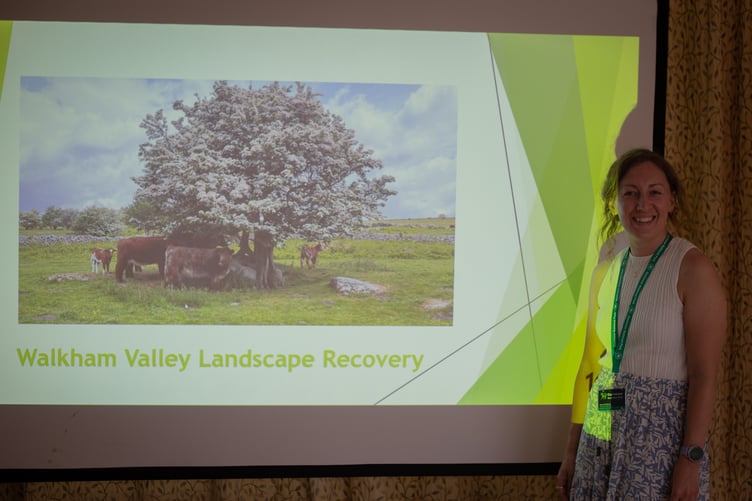
A series of awareness and survey sessions have been held by Dartmoor National Park Authority at Walkham Village Hall to meet residents, farmers and landowners.
The Walkham Valley Landscape Recovery Project is reimagining how this landscape can work for nature, climate and the people who depend on it.
Over three days Columb Hague, a farm support officer with the Dartmoor Hill Farm Project, has been meeting anyone popping into the sessions.

He said: “This is more than a traditional environmental scheme. And despite the name ‘recovery’ is about continuing the excellent environmental work we are doing with our partners.
“There is no question of big change. But we do want to know what farmers and locals think about our plans and to help us shape the future.
“This is a farmer-led, landowner-driven project creating a resilient, nature-rich future through habitat restoration and sustainable farming practices.”
The project is one of three Dartmoor areas selected for Defra’s Landscape Recovery scheme, supporting long-term environmental change through bespoke, landscape-scale agreements.
In the Walkham Valley, this means a plan shaped by its moorland edges, wooded river valleys, small field systems and cultural heritage.
Columb added: “The habitats being created and preserved by these long-term land management and traditional pastoral, grazing farming methods are supporting include some rare or valuable species.
“They are botanically rich, especially on Rhos (wet habitats) and grazed oak woodland, [with species] such as the marsh fritillary and Irish Ladies Tresses, wax cap funghi and lichens growing on trees.”
The Ven Nick Shutt, of Walkham, said: “Dartmoor is a very special place and very important socially and environmentally. So, I’m very pleased to make my points. We do need to keep it a thriving place to work on and enjoy.”
Villager Michael Partridge offered his skills and involvement in the traditional landscape management: “I qualified in drystone walling in 1988. I can’t manage physically now. But can supervise and teach if they need me.”
The project team is building the evidence and partnerships to guide decisions for the next 20 years, while assessing the valley’s ecological, social and economic needs.
This year habitat and species surveys across the River Walkham catchment, including deer drone surveys and butterfly and river surveys, will build an ecological baseline on which to base plans.
While the detailed plans are with land managers, a broad vision for the valley would be built around thriving rivers and wetlands, resilient woodlands and peatlands, healthy soils and diverse grasslands, and a landscape where cultural heritage sits alongside environmental considerations in shaping decisions.
The idea is also for wildlife to thrive, carbon is stored naturally, and the valley is better able to cope with floods and drought.
Farming would also remain productive and central, with wildlife, livestock, and people all benefiting from a landscape that’s working well ecologically.
With plans due in September, the Walkham Valley Landscape Recovery Project is entering a decisive stage, laying the foundations for a landscape where nature, farming and community thrive together.
Comments
This article has no comments yet. Be the first to leave a comment.