
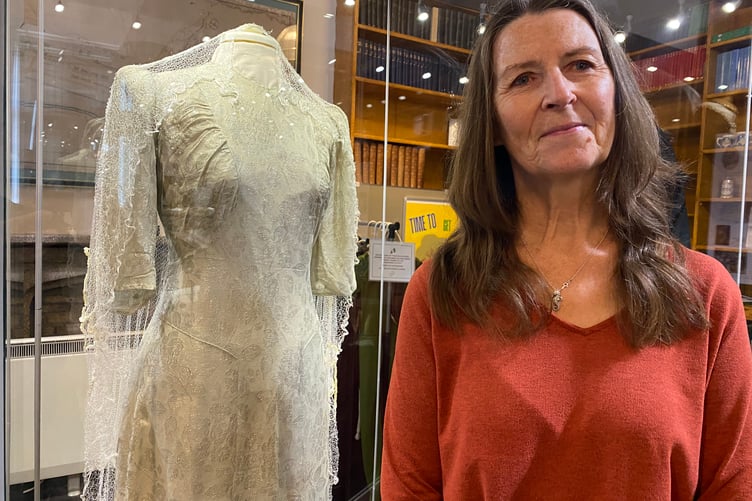
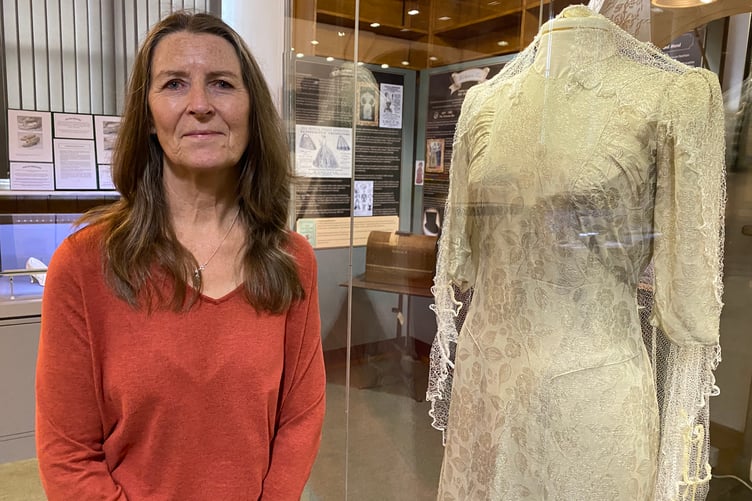
One of the stand-out new pieces on display at Tavistock Museum is a beautiful wartime wedding dress with an emotive and interesting story.
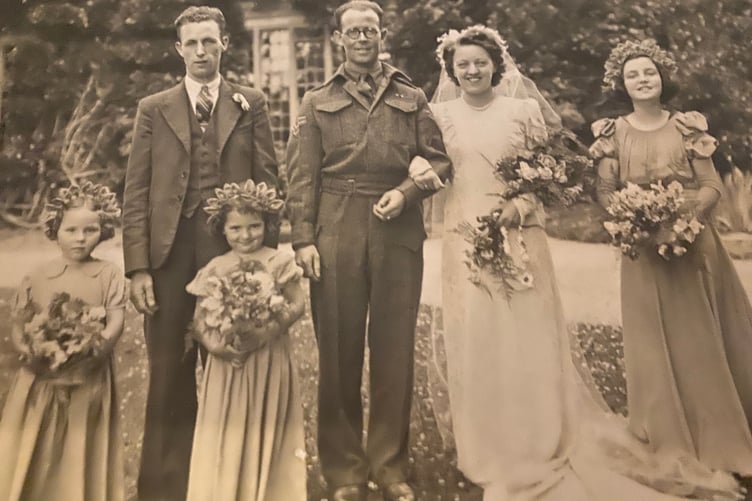
Pauline Richardson kindly donated mum Peggy’s long white dress to the museum’s extensive fashion collection in honour of her mother.
Fascinatingly, the dress was partly made of parachute silk, from World War Two stock. The war dominated her parents’ early life together, leading to their enforced separation and delayed marriage. Pauline’s dad Harold Windows was posted to several countries to join the war effort and was taken prisoner of war by the Germans.
When they were eventually reunited at the end of the war, restrictions bit hard, especially as Peggy came from a relatively poor family, and that impacted on the design of the dress and the wedding celebrations.

-and-his-husband-Jack-have-scooped-a-silver-award-for-runni.jpeg?width=209&height=140&crop=209:145,smart&quality=75)
-Sally-Prosser-Rosemary-Clarke-and-Helen-Ford-are-celebrat.jpeg?width=209&height=140&crop=209:145,smart&quality=75)
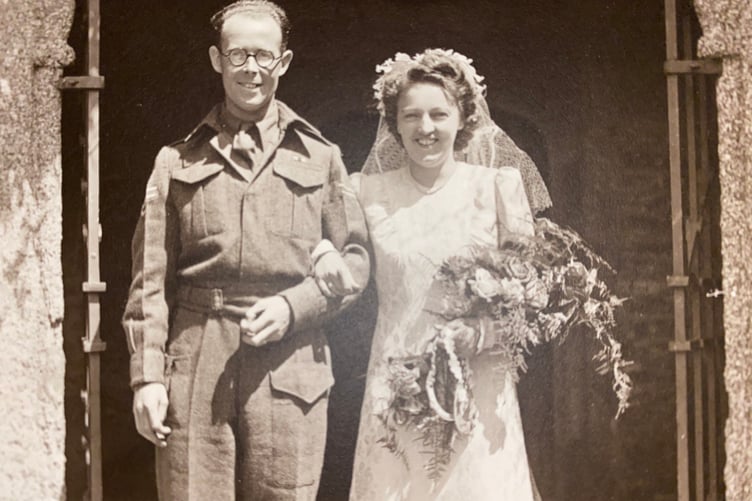
Pauline said: “The wedding was on a cloudy rainy June day, but when mum and dad stepped out of the church, the sun suddenly came out and it was thought that the marriage was blessed from then on.
“A local lady made mum’s dress with an underskirt of used parachute silk. The fabric was laid out and cut on sheets covering the floor of the house to protect the white material from the coal dust. She didn’t have much money, but was determined her dress would look the very best it could.
“The design came from mum who loved the movies and was influenced by what the stars were wearing on and off the screen. I think it looks lovely and brings lots of memories with it of mum. I see it as a tribute to mum. If it wasn’t here it would be hidden away and all folded up which wouldn’t be good for the dress. I particularly love the cobweb style of the veil.”
Peggy was born in Plymouth but raised in Wadebridge in north Cornwall.
She joined the NAAFI, which ran the NAAFI canteens feeding the forces, against her preferred choice, the Women’s RAF, because her mum forbade her to serve abroad. Peggy was part of Ralph Reader’s concert parties entertaining troops, who would later fight at D-Day.
Pauline’s dad Harold, who was born in Bristol, joined the Pioneer Corps which provided logistics, light engineering and heavy labour to be deployed in World War Two combat areas worldwide. He was placed in the Pioneer Corps, rather than in a fighting unit because of his poor eyesight. He saw action in African and Italian theatres of war, among others.
The couple met at a dance hall in Wadebridge, near where Harold was posted with the Army, just before World War Two broke out, when Peggy was 17. They got engaged, but did not marry until 1945 when Harold was liberated from a German PoW camp.
Wartime austerity showed in the wedding reception where the wedding cake had a cardboard top and real bottom, while the food was made by friend and family. However, the Egloshayle village church bells rang and a bugler sounded.
There was one blot on the happy day, however, Harold’s parents did not attend the ceremony, because they were French Catholic, rather than Methodist. But they did go to the reception. Honeymoon in a Torquay B&B followed and Harold was allowed double rations as he had lost so much weight as a PoW.
Comments
This article has no comments yet. Be the first to leave a comment.